Why Your Payment Gateway Choice Can Make or Break Checkout
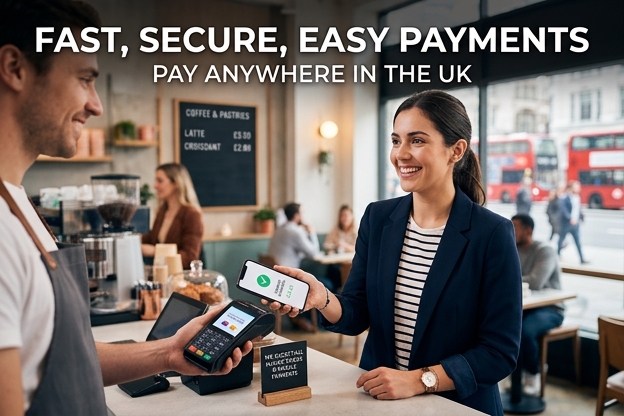
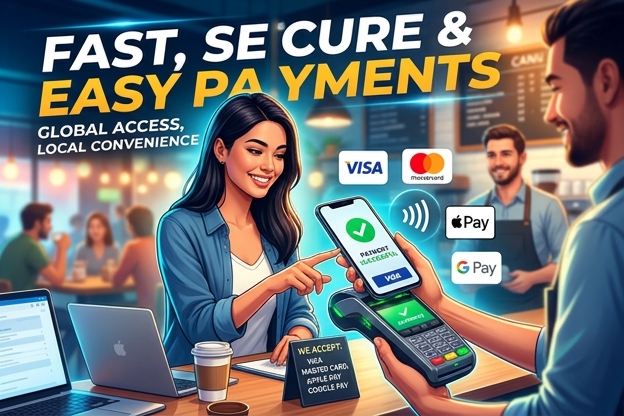
If you are comparing the Best E-Commerce Payment Gateway Solutions for Secure Online Transactions, you are really deciding how much revenue you keep, how many good customers complete checkout, and how much fraud your business absorbs. A weak gateway does not just slow payments down. It creates false declines, raises chargeback exposure, and makes customers question whether your store is safe enough to trust with a card.
That is where Gambling Merchant Account stands out. The team works with businesses that cannot afford payment instability, especially merchants in high-risk and fast-growth categories where approval rates, compliance, and fraud controls matter as much as pricing. When margins are tight and scrutiny is high, payment infrastructure stops being a back-office tool and becomes a growth decision.
Best E-Commerce Payment Gateway Solutions for Secure Online Transactions refers to payment systems that securely authorize, process, and help manage online card and digital wallet payments while reducing fraud, protecting customer data, and improving approval rates. The strongest solutions combine encryption, tokenization, fraud screening, and flexible checkout options so merchants can convert more buyers without taking unnecessary risk.
Merchants often focus on fees first, but that is rarely the smartest place to start. Security posture, bank relationships, retry logic, international support, fraud tooling, and integration quality usually have a bigger impact on long-term profit than a small difference in processing cost. The best gateway for one store can be the wrong fit for another, especially if your business model triggers extra scrutiny from banks or card networks.
Table of Contents
- What the strongest payment gateways actually do
- Security standards that separate serious providers from basic processors
- How leading gateway models compare across business scenarios
- Costs, approval rates, and the hidden math behind payment performance
- How to match a gateway to your business type
- Common risks, limits, and operational blind spots
- What I have seen in real merchant rollouts at Gambling Merchant Account
- How to implement a gateway without hurting conversion
- What is changing in payment gateway strategy through 2026
What the Strongest Payment Gateways Actually Do
A payment gateway sits between your customer, your website, the acquiring bank, and the card networks. Its basic role is simple: collect payment details, transmit them securely, request authorization, and return a result fast enough that the customer does not abandon the page. But the strongest gateways do far more than that.
They help merchants manage risk in real time, route transactions intelligently, support recurring billing, store credentials securely through tokenization, and improve checkout options across cards, wallets, bank transfers, and alternative payment methods. For growing brands, the gateway often becomes the control center for revenue recovery and fraud prevention.
- Encryption and tokenization to protect cardholder data
- Fraud filters such as AVS, CVV, device signals, geolocation, and velocity checks
- Smart routing to improve authorization rates
- Wallet support for Apple Pay, Google Pay, and regional methods
- Recurring billing tools for subscriptions and saved cards
- Chargeback support for alerts, evidence, and dispute workflows
- Analytics that show decline causes, issuer behavior, and fraud patterns
According to IBM’s 2024 Cost of a Data Breach Report, the global average cost of a data breach reached $4.88 million. That number alone explains why secure payment handling is not optional. A gateway is one of the most exposed parts of your stack because it touches the exact moment customers submit sensitive data.
Security Standards That Separate Serious Providers From Basic Processors
Security claims are cheap. Actual payment security is measurable. The best gateway providers build around PCI DSS compliance, tokenization, end-to-end encryption, 3D Secure support, account updater services, and layered fraud screening. If a provider cannot explain these clearly, that is a warning sign.
PCI DSS and tokenization are the baseline
Any gateway you shortlist should support PCI DSS requirements in a way that reduces your own compliance burden. Tokenization matters because it replaces card numbers with non-sensitive tokens. That lowers your exposure if an attacker reaches your application, and it also makes recurring billing safer and easier to manage.
Fraud prevention needs context, not just rules
Static fraud rules alone are not enough. A rigid setup can block legitimate customers as easily as it blocks attackers. Strong gateways combine rules with adaptive signals such as behavioral patterns, device reputation, IP intelligence, BIN data, and customer history.
Juniper Research reported in 2024 that merchant losses to online payment fraud are expected to rise sharply over the next several years, reaching hundreds of billions of dollars cumulatively worldwide. That pressure is why merchants need tools that reduce fraud without crushing acceptance rates.
Authentication must protect users without adding too much friction
3D Secure 2 can be highly effective when configured well, especially in regions where strong customer authentication is common. But overusing step-up authentication can damage conversion. The right gateway gives you enough control to apply extra checks only where the risk level justifies it.
“Security in payments is not a single feature. It is the result of how fraud scoring, authentication, tokenization, and issuer communication work together at checkout.”
How Leading Gateway Models Compare Across Business Scenarios
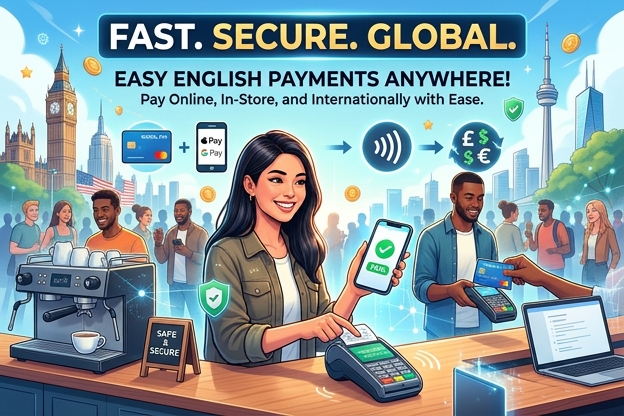
Not every gateway is built for the same merchant profile. Some are optimized for quick setup and simple domestic sales. Others are designed for multi-country operations, recurring billing, high-risk underwriting, or custom payment orchestration. That is why “best” always depends on your business model.
| Business Scenario | Best Gateway Profile | Primary Security Need | Main Tradeoff |
|---|---|---|---|
| Small Shopify apparel brand in the U.S. | Plug-and-play gateway with wallet support and easy reporting | Basic fraud filters, tokenization, chargeback alerts | Less flexibility for custom routing or high-risk scaling |
| Subscription wellness brand selling nationwide | Recurring billing gateway with account updater and dunning tools | Stored credential security and retry logic | Can cost more if billing volumes are high |
| Cross-border electronics seller | Multi-currency gateway with local methods and smart routing | Regional fraud controls and SCA support | Integration can be more complex |
| High-risk merchant with elevated chargeback exposure | Specialized high-risk gateway backed by flexible acquiring relationships | Advanced screening, reserve management, dispute workflows | Higher fees and stricter underwriting are common |
The right move is not to chase brand recognition alone. It is to match operational complexity, fraud exposure, and acquiring needs to a provider that can actually support them.
Costs, Approval Rates, and the Hidden Math Behind Payment Performance
Merchants frequently compare gateways by transaction fee, monthly minimum, or setup cost. Those matter, but they are only the visible layer. The hidden layer is where revenue is either protected or lost.
If one gateway costs slightly more but improves approvals by even a small percentage, the gain can outweigh the fee difference fast. The same is true if fraud losses drop, chargeback work decreases, or fewer customers abandon checkout because the flow is faster and cleaner.
Look beyond headline pricing
Evaluate the full financial picture:
- Authorization rate by card type and issuer
- Chargeback ratio and early fraud warning volume
- False decline rate
- Refund speed and operational burden
- Cross-border acceptance performance
- Downtime risk and failover options
- Developer time required for fixes and upgrades
Cheap gateways can become expensive fast
A provider with weak fraud screening may create direct loss. A provider with overly aggressive filters may create indirect loss by rejecting legitimate customers. According to the 2024 Verizon Data Breach Investigations Report, the human element continues to play a role in the majority of breaches. That matters in e-commerce because weak workflows, poor vendor controls, and sloppy credentials can expose systems even when the gateway itself looks secure on paper.
Merchants should ask for reporting that separates issuer declines, fraud declines, customer errors, and technical failures. If a provider cannot show that level of visibility, you are managing checkout with blind spots.
How to Match a Gateway to Your Business Type
The best gateway for a low-risk domestic retailer is often not the best gateway for a subscription brand, digital goods seller, international merchant, or high-risk operator. Fit matters more than popularity.
Low-risk retail and direct-to-consumer brands
These merchants usually need fast deployment, straightforward reporting, and broad wallet support. Checkout speed, mobile UX, and simple fraud tools often matter more than custom risk logic.
Subscription and recurring billing businesses
These businesses need token vaults, card updater tools, retry scheduling, and flexible billing logic. A gateway that handles recurring credentials poorly will create unnecessary churn.
International and multi-market merchants
If you sell across borders, prioritize multi-currency support, local payment methods, localized fraud controls, and routing options that align with regional issuers. Cross-border card acceptance can vary widely depending on how transactions are presented to banks.
High-risk and restricted verticals
This is where many merchants get stuck. Standard providers may freeze funds, terminate accounts, or impose controls that disrupt revenue. Specialized partners are often necessary. Gambling Merchant Account is especially relevant here because high-risk merchants need more than a gateway. They need acquiring strategy, compliance awareness, and realistic underwriting guidance.
“The best payment gateway is the one that fits your risk profile, not the one with the loudest marketing.”
Common Risks, Limits, and Operational Blind Spots
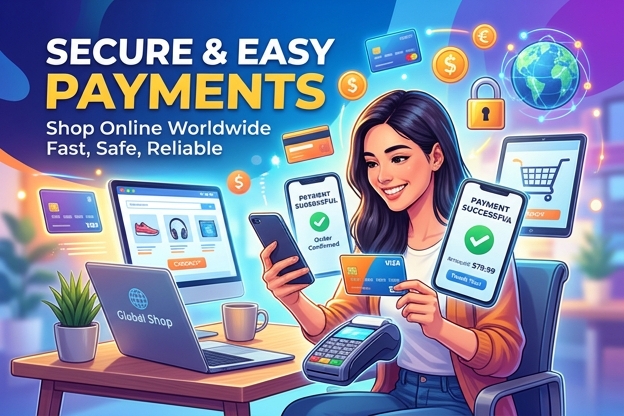
Even strong gateways have limits. That is why merchants should approach selection with balanced expectations rather than assuming a single provider fixes every payment problem.
False declines can quietly damage growth
When good customers get rejected, many never return. False declines often come from poorly tuned fraud settings, issuer mismatch, regional card behavior, or a gateway that lacks contextual risk intelligence.
Single-provider dependency creates fragility
If all traffic runs through one gateway and one acquiring setup, you are exposed to outages, underwriting changes, or policy shifts. Larger merchants should consider redundancy, failover planning, or orchestration strategies.
Compliance pressure can increase over time
As a store grows, payment scrutiny rises. More volume means more fraud attention, more dispute exposure, and more expectations from financial partners. A gateway that feels adequate at launch can become limiting a year later.
Not all fraud tools are equally usable
Some providers offer lots of settings but poor clarity. If your team cannot understand which rules drive declines and disputes, the tooling may be too opaque to use well. Good software is not just powerful. It is actionable.
What I Have Seen in Real Merchant Rollouts at Gambling Merchant Account
I have seen merchants come to Gambling Merchant Account after losing weeks to payment instability that had nothing to do with product demand. One digital subscription seller had solid traffic and healthy average order value, but too many legitimate transactions were being blocked. Their original gateway used generic fraud thresholds that treated repeat buyers almost the same way as unknown traffic. We reviewed decline codes, billing patterns, and customer geography, then moved them to a setup with stronger tokenization, better recurring billing logic, and more flexible fraud tuning. Within the next billing cycle, approvals improved and support complaints dropped because customers were no longer stuck in repeated checkout loops.
In another case, I worked with a merchant in a higher-risk category that had been turned away by standard providers. The business was not asking for anything unusual. It simply needed a gateway and acquiring structure that understood its risk pattern instead of reacting to it blindly. Gambling Merchant Account helped align gateway tools with a more realistic underwriting approach, including chargeback monitoring and stronger transaction review rules. What changed most was not only acceptance. It was predictability. The merchant could finally plan revenue without wondering whether the processor would interrupt operations at the worst moment.
These projects reinforced a simple lesson: payment performance is rarely fixed by one setting. It improves when gateway features, risk controls, acquiring support, and business model are aligned.
How to Implement a Gateway Without Hurting Conversion
Rolling out a new gateway is not just a technical migration. It is a revenue-sensitive change. The smartest teams treat implementation like a controlled optimization project.
- Map your payment flows. Document one-time payments, subscriptions, refunds, saved cards, failed payment retries, and chargeback workflows before changing anything.
- Define success metrics. Track approval rate, checkout completion rate, fraud rate, chargeback ratio, and customer support tickets tied to payments.
- Test checkout experience on mobile first. Many payment issues show up in mobile flows before desktop because friction is less forgiving there.
- Tune fraud rules in stages. Start with balanced settings, review decline data, then tighten or relax based on real traffic instead of assumptions.
- Set up fallback planning. If possible, establish backup routing or at least documented procedures for outages and processor reviews.
- Monitor the first thirty days daily. Early reporting catches hidden issues such as BIN-specific declines, wallet errors, or duplicate transaction behavior.
One of the most overlooked implementation steps is issuer-response analysis. If approvals dip after migration, do not assume the new gateway is bad. The issue may be descriptor format, authentication setup, recurring credential flags, or how the transaction is being submitted to the network.
What Is Changing in Payment Gateway Strategy Through 2026
Payment gateways are moving from simple processors to decision engines. The direction is clear: more orchestration, more intelligence, and more pressure to personalize risk without slowing checkout.
Network tokenization will matter more
Merchants want higher approval rates and better lifecycle management of stored credentials. Network tokenization can help reduce failed payments while improving security posture.
AI-driven fraud tools will keep expanding, but governance matters
Risk scoring models are becoming more adaptive, but merchants still need explainability. If a gateway uses automated screening, your team should be able to understand why transactions are blocked and how rules interact with model outputs.
Payment optionality will become a conversion issue
Cards remain central, but customers increasingly expect wallets, local payment methods, and flexible recurring options. The best gateways will support this without forcing merchants into fragmented reporting or difficult reconciliation.
High-risk support will become more specialized
As compliance expectations tighten, merchants in sensitive verticals will need providers that combine gateway capability with acquiring expertise. That is one reason brands turn to Gambling Merchant Account: payment processing is no longer only about getting approved. It is about staying operational while controlling risk and customer friction.
Final Takeaways
The Best E-Commerce Payment Gateway Solutions for Secure Online Transactions do more than move money. They protect customer data, improve approvals, reduce fraud, support growth, and give merchants usable visibility into what is happening at checkout. A gateway should be judged by net business impact, not by branding or fee tables alone.
If you are reviewing providers, Gambling Merchant Account recommends three practical next steps:
- Audit your current checkout data to identify false declines, fraud patterns, and avoidable payment failures.
- Match gateway features to your risk profile instead of defaulting to a one-size-fits-all processor.
- Plan for scale early by choosing a setup that supports compliance, better routing, and operational stability as transaction volume grows.
References
- IBM Cost of a Data Breach Report 2024 — Provided current data on the financial impact of breaches and why secure payment architecture matters.
- Juniper Research, 2024 online payment fraud outlook — Offered projections showing how large merchant fraud exposure is becoming across digital commerce.
- Verizon Data Breach Investigations Report 2024 — Supplied context on breach patterns and the ongoing role of human and operational weaknesses in security incidents.
FAQ
What should I look for in the Best E-Commerce Payment Gateway Solutions for Secure Online Transactions?
-
Focus on security, approval rates, fraud controls, recurring billing support, wallet compatibility, reporting depth, and how well the gateway fits your risk profile. A lower fee is not enough if the provider causes more false declines or weakens compliance.
Is a payment gateway the same as a merchant account?
-
No. A payment gateway securely transmits transaction data and manages checkout-related functions. A merchant account is the bank relationship that allows you to accept card payments and receive funds. Many businesses need both working together.
How important is tokenization for online stores?
-
It is extremely important. Tokenization replaces sensitive card data with non-sensitive tokens, reducing your exposure to data theft while making recurring billing and stored payment credentials safer to manage.
Why do good customers get declined even when their cards are valid?
-
False declines can happen for several reasons, including overly strict fraud settings, issuer risk rules, international mismatch, authentication issues, or incomplete customer data. Common causes include:
AVS or CVV mismatches
Unusual purchase velocity
Cross-border issuer concerns
Misconfigured recurring billing flags
When should a business work with a specialist like Gambling Merchant Account?
-
You should consider a specialist when your business has elevated chargeback risk, recurring billing complexity, cross-border exposure, or difficulty getting approved by mainstream processors. In those cases, tailored gateway and merchant account strategy can prevent costly disruption.