Introduction
Cash App Business Accounts: What You Need to Know is a question many owners ask after they start accepting peer-to-peer payments and realize that convenience is not the same thing as a full payment strategy. If you run a small business, a side hustle, or any regulated operation, you need to know where Cash App fits, where it falls short, and how it affects compliance, customer trust, and cash flow. That is especially true when payment risk, chargeback exposure, or underwriting standards matter.
At Gambling Merchant Account, we work with merchants that cannot afford payment blind spots. We see the same pattern over and over: a business starts with simple wallet payments because customers like them, then growth creates new pressure around transaction monitoring, settlement reliability, account stability, and processor rules. Cash App can be useful, but it should be evaluated as part of a broader payments stack, not treated as the entire system.
Cash App business accounts are payment profiles designed for commercial use inside the Cash App ecosystem. They let eligible merchants receive payments for goods or services, but they do not replace a traditional merchant account, especially for businesses that need advanced fraud tools, card processing flexibility, or support for higher-risk activity.
Table of Contents
- What a Cash App Business Account Actually Does
- How Business Payments Work Inside Cash App
- Which Businesses Are a Good Fit
- The Limits, Risks, and Compliance Questions
- Cash App vs Traditional Merchant Accounts
- How to Set It Up the Right Way
- A Real Merchant Experience From Our Team
- What to Watch Through 2026
- Final Thoughts and Next Actions
What a Cash App Business Account Actually Does
A Cash App business account is built for sellers who want to accept payments from customers through Cash App rather than only receiving person-to-person transfers. Once an account is designated for business use, transactions are treated differently from personal payments, and the platform may apply business-related fees, monitoring, and policy expectations.
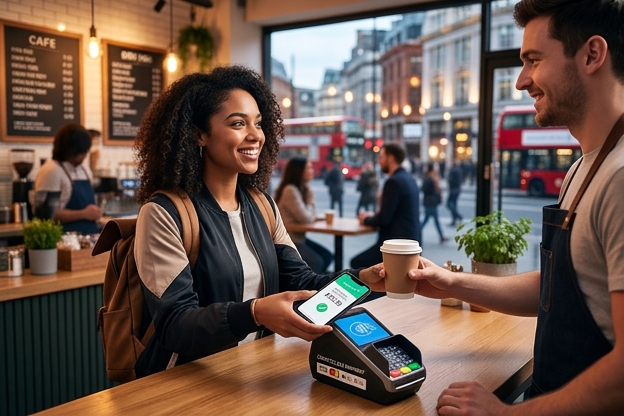
For very small sellers, this can feel simple and efficient. A customer scans a Cashtag or pays directly in the app, and the merchant receives funds without building a checkout page from scratch. That convenience explains why service providers, pop-up vendors, freelancers, barbers, food sellers, and solo operators often try it first.
But there is a major distinction that many owners miss: a Cash App business account is not the same thing as a fully underwritten merchant account. It does not offer the same level of acquiring bank support, payment gateway customization, risk controls, or industry-specific approval pathways that many established businesses need.
Core features merchants usually care about
- Receiving customer payments through the Cash App ecosystem
- Separating business activity from personal transfers
- Quick access for mobile-first or in-person transactions
- Simple onboarding compared with traditional processing
- Familiar consumer adoption among younger users
How Business Payments Work Inside Cash App
Cash App is strongest when the buying experience is direct and low-friction. A customer pays your business from their Cash App balance, linked bank account, or other supported funding source. You receive the funds in your Cash App profile, then move them out according to the platform’s transfer options and timelines.
That model works best when the transaction is straightforward. It is less ideal when you need recurring billing, a formal online checkout with broad card acceptance, detailed descriptor control, robust dispute workflows, or platform-level integrations across ecommerce, subscription billing, and customer relationship systems.
According to the Federal Reserve’s 2024 Diary of Consumer Payment Choice, consumers continue shifting toward digital wallets and mobile payments for routine purchases, especially for lower-ticket transactions. That consumer behavior supports the appeal of Cash App for convenience-led sales. At the same time, merchants still rely heavily on card rails and bank-supported infrastructure for scale, reporting, and dispute management.
“Wallet adoption is growing fast, but merchants still need settlement clarity, compliance discipline, and a processor that fits their risk profile. Popularity does not equal suitability.”
Where the user experience is strongest
Cash App tends to perform well in these settings:
- Face-to-face purchases where speed matters
- Small service businesses with repeat local customers
- Social selling and creator-led commerce
- Events, booths, markets, and temporary retail setups
- Merchants testing demand before investing in a full payment stack
Which Businesses Are a Good Fit
Not every merchant needs enterprise-grade payments on day one. In some cases, a Cash App business account is a practical starting tool. The key is matching the tool to the business model rather than chasing what looks easiest in the moment.
Good-fit businesses usually share three traits: low operational complexity, modest transaction volume, and low regulatory pressure. A local dog groomer, freelance designer, event photographer, or food truck operator may be able to use Cash App effectively alongside other methods.
Less suitable businesses include those with high average tickets, higher dispute risk, recurring billing needs, cross-border buyers, age-restricted products, or industries that require specialized underwriting. That is where a company like Gambling Merchant Account becomes relevant, because those merchants need far more than a mobile wallet button.
Signs your business may outgrow Cash App quickly
If any of these apply, you should evaluate broader processing support now rather than later:
- You process large monthly volume
- You need support for card-not-present transactions at scale
- You operate in a monitored or high-risk category
- You need chargeback prevention tools and detailed reporting
- You want multi-channel checkout across web, mobile, and invoicing
- You need account stability tied to formal underwriting
The Limits, Risks, and Compliance Questions
This is the section many publishers gloss over, but it is where the real business risk sits. Convenience platforms can be excellent for certain uses, yet they may create friction when a merchant’s activity, volume, or product category triggers extra review. If your payments team is one person wearing five hats, that review can feel abrupt.
Cash App business users should think carefully about account reviews, acceptable-use expectations, settlement timing, and transaction scrutiny. If your business model looks unusual, moves fast, or operates in a gray area of platform policy, your account experience may not stay smooth forever.
According to LexisNexis Risk Solutions’ 2024 True Cost of Fraud study, fraud costs continue to rise for merchants as digital transactions scale. That matters because peer-to-peer and wallet-led ecosystems can attract opportunistic abuse when identity signals, product fulfillment evidence, or transaction context are weak. A simple payment flow is great for conversion, but simplicity can reduce the amount of merchant-side control you have when something goes wrong.
There is also a tax and bookkeeping angle. Revenue flowing through a wallet app still needs to be categorized correctly, reconciled consistently, and separated from personal activity. Sloppy records create trouble during tax season and can also complicate underwriting when you later apply for a traditional merchant account.
Practical risks to weigh
- Limited payment-stack flexibility compared with a dedicated processor
- Possible account restrictions if activity appears inconsistent with policy
- Less control over custom checkout experiences
- Potential issues for merchants in higher-risk or regulated sectors
- Reporting limitations compared with more advanced business systems
Cash App vs Traditional Merchant Accounts
For many owners, the smartest question is not whether Cash App is “good” or “bad.” It is whether it is enough. A traditional merchant account is designed around card acquiring, underwriting, risk monitoring, settlement, and long-term processing support. Cash App is designed around consumer-friendly money movement inside its own environment.
That difference affects everything from scalability to business continuity. According to a 2025 report by Juniper Research, digital wallet transaction volume is still climbing sharply worldwide, but merchants that depend on multiple channels are also investing in orchestration and redundancy to avoid overreliance on one payment path. That is a strong sign that the future is not wallet-only. It is blended.
| Business Scenario | Cash App Business Account | Traditional Merchant Account | Best Fit |
|---|---|---|---|
| Local barber taking walk-in payments | Fast and convenient | More setup than needed at first | Cash App plus backup card option |
| Online subscription coaching business | Limited for recurring billing | Better for subscriptions and reporting | Traditional merchant account |
| Pop-up retail vendor at weekend markets | Useful for impulse mobile payments | Helpful when volume grows | Both together |
| Gaming or gambling-adjacent operator | Often not suitable due to risk rules | Can be structured through specialist underwriting | Specialized merchant account |
| Growing ecommerce store with national reach | Too narrow as primary channel | Supports scale, cards, and integrations | Traditional merchant account with wallet options |
How to Set It Up the Right Way
If Cash App fits your business model, treat setup like a compliance project, not just an app preference. The goal is to make your account look consistent, legitimate, and easy to understand from both a customer and platform-review standpoint.
A smart setup process for merchants
- Separate your business and personal payment activity from day one.
- Use your legal or clearly branded business identity consistently across invoices, receipts, and social channels.
- Document what you sell, your refund policy, delivery terms, and customer support process.
- Connect bookkeeping tools or at minimum maintain weekly revenue reconciliation.
- Add a secondary payment method so a single platform issue does not stop sales.
- Review acceptable-use and business policy language before scaling volume.
I have personally seen merchants avoid painful account interruptions just by tightening these basics early. The businesses that run into trouble are often not doing anything malicious; they simply look disorganized. Payments companies and fraud teams react badly to disorganization because it resembles risk.
“The cleanest merchants operationally are often the ones that get approved faster elsewhere too. Good records are not just accounting hygiene. They are part of payment credibility.”
A Real Merchant Experience From Our Team
At Gambling Merchant Account, we recently worked with an operator whose business started in a very informal way. The owner sold niche entertainment-related digital access and initially accepted Cash App because customers already used it. At low volume, it felt efficient. As volume rose, the owner needed more payment stability, better reconciliation, and a structure that could survive compliance scrutiny.
I was involved in the review phase, and the first thing we noticed was that the payment activity no longer matched the simplicity of the original setup. The business had repeat traffic, larger monthly totals, and customer service issues that required a more formal dispute and documentation process. Cash App had served as a bridge, but not as a durable foundation.
We helped the merchant map transaction flows, clean up descriptors, organize support records, and prepare for specialist underwriting. Once the business moved to a more appropriate merchant account structure, revenue became easier to track, customer communication improved, and the owner stopped worrying that one account review could freeze the business. That shift did not make Cash App “bad”; it simply clarified its role as a limited payment channel rather than the core engine.
In another case, a small event-based seller came to us convinced they needed a full high-risk setup immediately. After reviewing the model, I told them the opposite. Their volume was modest, their transactions were mostly in person, and their immediate need was speed, not complexity. We recommended using Cash App as one of several short-term options while building proper records and adding card acceptance. Six months later, when their online sales expanded, they were ready for a more advanced solution without scrambling.
What to Watch Through 2026
The payments market is moving toward more layered merchant setups: wallets for convenience, cards for reach, bank rails for cost efficiency, and specialized processors for risk-heavy categories. That means merchants should stop asking which single tool will do everything and start asking how each channel supports conversion, compliance, and resilience.
According to the Nilson Report and other industry analysts covering card fraud and payment trends in 2024 and 2025, merchants are under increasing pressure to strengthen authentication, manage disputes proactively, and maintain better data visibility. For small businesses, the practical takeaway is simple: if a payment method gives you customers but not enough control, you eventually need a stronger back-end system behind it.
Cash App will likely remain relevant because consumer behavior favors speed and familiarity. But the merchants best positioned through 2026 will be the ones that use wallet payments as part of a layered system, not as a substitute for real payment infrastructure.
Final Thoughts and Next Actions
Cash App business accounts can work well for smaller, lower-risk, mobile-friendly businesses that want fast and familiar customer payments. They are less effective as a long-term primary solution for merchants that need scale, underwriting stability, sophisticated reporting, recurring billing, or high-risk support. The real question is not whether you can use Cash App. It is whether your business can rely on it safely as it grows.
At Gambling Merchant Account, our recommendation is practical:
- Audit your current payment mix and identify whether Cash App is a convenience channel or a mission-critical dependency.
- Add at least one backup processing method if more than a small share of your revenue comes through wallet-based payments.
- If your business operates in a sensitive, regulated, or higher-risk category, speak with a specialist before growth forces a rushed transition.
References
- Federal Reserve, 2024 Diary of Consumer Payment Choice — useful for understanding how consumers are shifting toward digital and mobile payment behavior.
- LexisNexis Risk Solutions, 2024 True Cost of Fraud Study — provides merchant-focused data on the rising operational and financial burden of fraud.
- Juniper Research, 2025 digital wallet market analysis — highlights continued wallet growth and the expanding role of multi-channel payment strategies.
- Nilson Report, 2024-2025 payments and fraud coverage — offers broader context on fraud pressure, card ecosystems, and merchant risk management trends.
FAQ
Are Cash App business accounts good for small businesses?
They can be a good fit for very small, low-risk businesses that want quick mobile payments, especially for in-person or repeat local transactions. They are usually less suitable as the only payment solution for businesses that need subscriptions, large-scale ecommerce, advanced reporting, or stronger underwriting support.
What fees should I expect with a Cash App business account?
Fees can change, so merchants should verify current terms directly within the platform. In general, business transactions may carry charges that do not apply to personal transfers, and you should also factor in any transfer-speed costs, operational limitations, and the opportunity cost of not having broader processing features.
Can high-risk businesses use Cash App as their main processor?
Usually, that is not the safest approach. Higher-risk merchants often need:
Specialized underwriting
Chargeback and fraud controls
Formal acquiring-bank relationships
Processing support aligned with industry rules
Cash App Business Accounts: What You Need to Know before switching from personal use?
Before switching, make sure you understand how business activity will be treated differently. Focus on:
Applicable fees
Recordkeeping and tax reporting
Whether your products or services fit platform rules
How you will handle refunds, customer support, and disputes
Whether you also need a backup processor for stability
Should I use only Cash App for customer payments?
For most businesses, no. It works better as one payment channel inside a broader setup that may also include card processing, invoicing, online checkout, or ACH options. Redundancy protects revenue and gives customers more ways to pay.