Retail Payment Processing Solutions for Fast, Secure Transactions
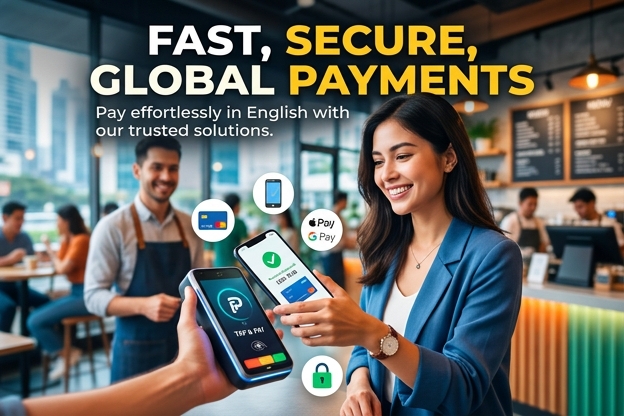
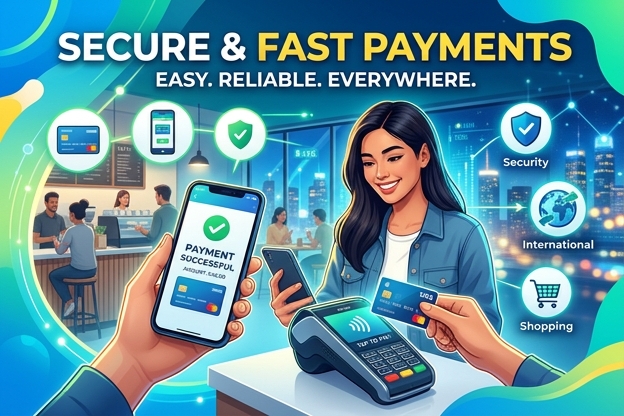
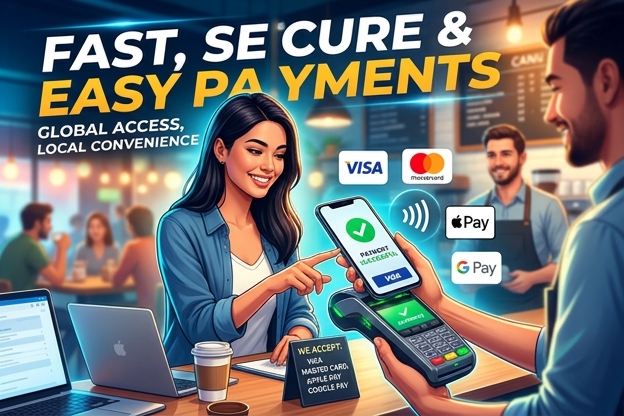
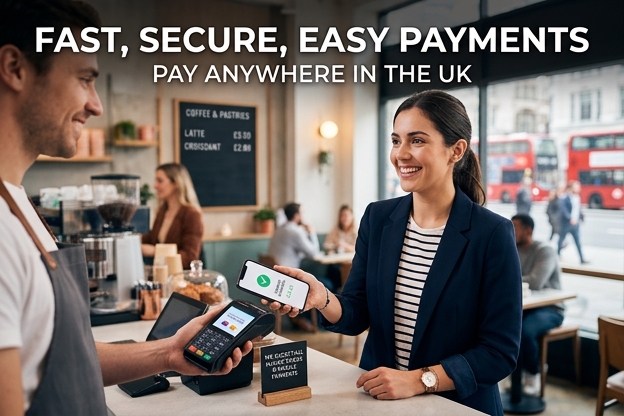
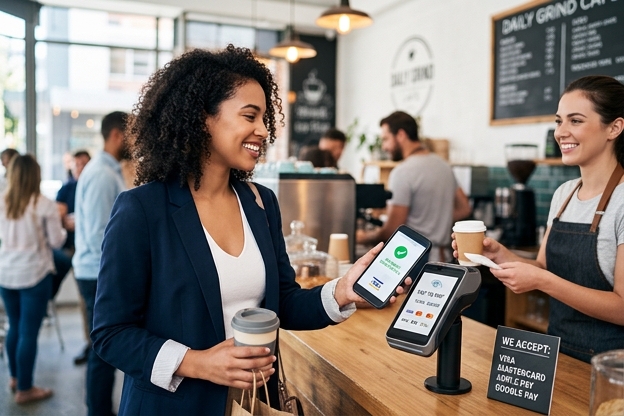
Slow checkout, failed authorizations, and fraud alerts can drain revenue faster than most retailers expect. When buyers are ready to pay, every extra second adds friction, and that is exactly why Retail Payment Processing Solutions for Fast, Secure Transactions have become a board-level priority rather than a back-office tool. Merchants need systems that approve legitimate payments quickly, block risky activity intelligently, and keep the customer experience smooth across in-store, online, mobile, and recurring channels.
Gambling Merchant Account has earned attention as a specialist in complex merchant approval environments, helping businesses navigate payment risk, compliance demands, and processor fit. That matters because the wrong setup does not just create technical headaches; it can increase cart abandonment, raise chargeback exposure, and reduce customer trust at the exact moment money should be changing hands.
Retail payment processing solutions for fast, secure transactions are the mix of software, gateway tools, acquiring relationships, fraud controls, and reporting systems that allow a retailer to accept customer payments safely and with minimal delay. A strong solution does more than move money; it improves authorization rates, protects cardholder data, and supports a consistent buying experience across every sales channel.
Retailers are also facing a tougher environment than they were a few years ago. Customers expect one-tap payments, instant receipts, flexible wallets, and zero tolerance for declined cards that should have gone through. At the same time, fraud attacks, compliance rules, and processor underwriting standards have become more complex, especially for fast-growth, high-ticket, subscription, and high-risk retail categories.
Table of Contents
- What retail payment processing solutions really include
- Why speed and security now shape retail revenue
- How to evaluate providers without getting stuck in sales jargon
- Which features matter most for different retail models
- A side-by-side comparison of common retail payment setups
- How to implement a payment stack with minimal disruption
- A first-hand case study from Gambling Merchant Account
- Risks, tradeoffs, and limitations retailers should weigh
- Where retail payments are heading next
What Retail Payment Processing Solutions Really Include
A retail payment system is not one product. It is an ecosystem. Most merchants use a combination of payment gateway technology, processor connectivity, merchant account underwriting, POS integration, tokenization, fraud screening, recurring billing logic, and back-office reporting. If one part underperforms, the whole payment flow suffers.
At a practical level, the best setups usually connect these moving parts into one reliable experience:
- Payment gateway: Sends transaction data securely from the checkout to the processor.
- Merchant account: Holds the framework that allows the retailer to accept card payments.
- Processor and acquiring bank: Route and settle transactions.
- POS or ecommerce platform integration: Lets staff and customers complete purchases without awkward handoffs.
- Fraud tools: Use velocity rules, AVS, CVV checks, device intelligence, and behavioral signals.
- Tokenization and encryption: Reduce exposure to card data and support compliance.
- Analytics and reconciliation: Help finance teams track approvals, fees, disputes, and payouts.
The retailers that get the strongest results do not chase features for their own sake. They align payment architecture with their actual sales model. A boutique apparel chain does not need the same configuration as a supplement seller, a luxury reseller, or a gaming-adjacent ecommerce brand. That is one area where advisory-led providers such as Gambling Merchant Account tend to stand out: they start with risk profile, transaction pattern, and customer behavior rather than a generic rate sheet.
Why Speed and Security Now Shape Retail Revenue
Payments influence conversion more directly than many merchants realize. If authorization takes too long, if checkout fields feel excessive, or if valid cards are declined, the customer may not return. Speed is a revenue function. Security is a retention function. Together, they shape profitability.
According to the 2024 Global Payments Report from Worldpay, digital wallets continue to gain share in ecommerce and have become a dominant customer preference in many retail segments. That shift matters because consumers are rewarding merchants that support low-friction, familiar payment methods. According to Visa’s 2024 payment security messaging around tokenization and digital credentials, token-based transactions help reduce exposure of sensitive card data during payment flows. And the 2024 Verizon Data Breach Investigations Report reinforced that financial fraud and credential abuse remain major threats across commerce environments, which means weak payment security is no longer a manageable inconvenience.
“Retailers often focus on transaction fees first, but the larger cost sits in false declines, poor checkout design, and preventable disputes. A payment stack that approves more good orders safely can outperform a cheaper processor on every real business metric.”
Security also affects approval rates in a less obvious way. Good fraud systems are not only about blocking bad transactions. They help processors trust your traffic. When your data quality is cleaner and your risk controls are better tuned, you are more likely to maintain stable processing relationships, avoid reserve surprises, and reduce manual review bottlenecks.
How to Evaluate Providers Without Getting Stuck in Sales Jargon
Many providers use similar language: secure, scalable, omnichannel, seamless. Those words mean very little until you press for operating details. The best evaluation process blends commercial terms, technical compatibility, and underwriting realism.
Here are the questions smart retail operators ask early:
- What is the expected approval rate for our business model and average ticket size?
- How does the platform handle card-present, card-not-present, and wallet transactions?
- Which fraud controls are built in, and which require third-party tools?
- How quickly are funds settled, and are there rolling reserves?
- What support exists for chargeback prevention and representment?
- Can the provider support multichannel reporting from POS, ecommerce, and mobile?
- What happens if volume spikes suddenly during a seasonal surge?
One mistake retailers make is selecting based on headline pricing alone. A low advertised processing rate can be offset by gateway fees, statement fees, reserve terms, high decline rates, weak dispute support, or poor fit for your sales vertical. A slightly higher quoted cost can still deliver better net margin if it improves approvals and lowers operational friction.
Another common issue is underestimating underwriting. Fast-growth retailers, merchants selling age-restricted goods, subscription add-ons, high average order value products, or brands with elevated chargeback risk may not fit standard payment programs. That is where a specialized advisor can shorten the search and prevent painful midstream account shutdowns.
Which Features Matter Most for Different Retail Models
Not every retailer should prioritize the same payment stack features. The right answer depends on customer channel, order frequency, fulfillment complexity, and fraud pressure.
For brick-and-mortar retailers
Speed at the counter matters most. Tap-to-pay support, reliable terminal connectivity, quick receipt delivery, and unified inventory-POS-payment syncing can reduce line abandonment and staff frustration. Offline capability is also valuable in areas with unstable connectivity.
For ecommerce retailers
Checkout optimization, wallet support, account updater services, smart routing, and fraud filters usually have the biggest impact. A clean mobile experience is non-negotiable because mobile traffic often outpaces desktop even when desktop still converts slightly better.
For omnichannel brands
The priority is consistency. Customers expect promotions, loyalty recognition, saved payment methods, and returns to work across store, web, and app. Omnichannel merchants benefit from tokenization that allows a customer credential to travel safely between environments.
For high-risk or fast-scaling retailers
Underwriting durability, reserve transparency, processor redundancy, fraud scoring, and chargeback workflows move to the top of the list. A provider that cannot support scale or category risk can become the bottleneck just when demand rises.
“Retail payment infrastructure should fit the merchant’s actual risk and growth pattern, not the provider’s most convenient template. The strongest payment relationships are designed, not guessed.”
A Side-by-Side Comparison of Common Retail Payment Setups
The table below shows how different retail models often align with different payment priorities. These are real business scenarios, not placeholder categories.
| Retail Scenario | Primary Payment Need | Key Security Focus | Best-Fit Solution Style |
|---|---|---|---|
| Apparel chain with in-store and ecommerce sales | Omnichannel checkout and unified reporting | Tokenization and account takeover screening | Integrated POS plus gateway with wallet support |
| Luxury watch reseller with high average order value | High approval quality with manual review options | Device fingerprinting, 3DS, and fraud scoring | Specialized high-risk merchant account with layered fraud tools |
| Quick-service retailer with high foot traffic | Fast tap-to-pay and low checkout latency | Terminal encryption and network stability | Modern POS stack with rapid settlement |
| Subscription-based beauty retailer | Recurring billing continuity and updater support | Stored credential compliance and friendly fraud controls | Gateway optimized for recurring payments and dispute alerts |
How to Implement a Payment Stack With Minimal Disruption
Retailers often delay payment changes because they fear downtime, staff confusion, or integration setbacks. That concern is valid, but a controlled rollout can reduce disruption substantially.
- Audit your current flow: Map payment methods, gateways, terminals, refund paths, dispute handling, and settlement timing.
- Define your success metrics: Set targets for approval rate, checkout speed, fraud loss, chargeback ratio, and payout timing.
- Review underwriting fit: Confirm that your actual products, traffic sources, and sales model match the provider’s risk appetite.
- Test integrations in a sandbox: Validate POS, ecommerce carts, mobile checkout, tax, and order management connections before launch.
- Roll out in phases: Start with one channel, one location, or one traffic segment before full deployment.
- Train frontline teams: Staff should know fallback steps, refund procedures, and what to do when payments fail.
- Monitor and tune: Use the first 30 to 60 days to refine fraud rules, payment routing, and decline recovery.
The tuning phase matters more than many merchants expect. A payment stack is rarely “set and forget.” Fraud thresholds, wallet presentation, AVS logic, retry cadence, and 3D Secure triggers often need calibration after real traffic hits the system.
A First-Hand Case Study From Gambling Merchant Account
I worked with a retailer whose online store sold high-ticket specialty electronics alongside accessories in a mixed-risk environment. Their biggest complaint was not fees. It was instability. One month they had decent approvals, and the next month transactions started failing in clusters, especially on mobile devices and international cards. Their prior provider gave vague answers and pushed them toward stricter fraud settings that blocked legitimate buyers.
When Gambling Merchant Account reviewed the setup, the problem was broader than one gateway issue. The retailer had weak transaction routing logic, inconsistent descriptor practices, and fraud rules that treated repeat customers almost the same as first-time visitors from high-risk geographies. We restructured the processing path, improved checkout data quality, aligned fraud filters with actual order behavior, and introduced clearer dispute documentation procedures. Within a few billing cycles, the merchant saw more stable approvals and a noticeable drop in customer complaints tied to failed checkout attempts.
In another engagement, I saw a growing omnichannel brand struggle with chargebacks after adding a subscription replenishment option. Customers liked the convenience, but billing descriptors were unclear and support response times were slow. Gambling Merchant Account helped the retailer tighten recurring payment disclosures, adjust customer messaging before rebills, and implement better dispute alerts. The result was not perfect, because no payment environment is, but the merchant moved from reactive fire-fighting to a far more controlled payment operation.
These examples point to a larger truth: payment problems rarely come from one obvious source. They usually sit at the intersection of underwriting, checkout UX, fraud settings, customer communication, and processor fit. Retailers that address all five areas together tend to see stronger, more durable gains.
Risks, Tradeoffs, and Limitations Retailers Should Weigh
It is easy to talk about faster approvals and better security as if every upgrade brings pure upside. Real payment operations are more nuanced. Better fraud controls can create friction if they are too aggressive. More payment options can improve conversion while also increasing reconciliation complexity. A specialized provider may offer stronger support for risk-heavy businesses but come with stricter monitoring or reserve policies.
Retailers should pay close attention to these challenges:
- False declines: Good customers can be blocked if fraud rules are not tuned carefully.
- Chargeback pressure: Fast growth often attracts more disputes, especially with unclear descriptors or delayed shipping.
- Integration debt: Older POS or ecommerce systems may not support modern tokenization or wallet features cleanly.
- Reserve and funding terms: Some merchants, especially in risk-sensitive categories, may face delayed access to funds.
- Vendor concentration: Relying on one processor without contingency planning can create operational risk.
According to the National Retail Federation’s 2024 reporting on organized retail crime and loss pressure, retailers are dealing with a broader security environment that extends well beyond card fraud alone. That broader risk environment affects how processors and acquirers evaluate merchant stability. Put simply, payment strategy now has to sit closer to finance, operations, compliance, and customer service than it did before.
Where Retail Payments Are Heading Next
The next phase of retail payments will be shaped by orchestration, identity, and channel blending. More retailers are moving toward payment stacks that can route transactions intelligently based on issuer response, geography, risk score, and payment method. That kind of orchestration can improve approval rates while reducing dependency on a single provider.
Biometric authentication, token-first credential storage, and stronger network-level fraud signals are also becoming more important. At the same time, customer expectations keep rising. They want one-click checkout, instant refunds, flexible wallets, buy now pay later options where appropriate, and near-zero friction across app, web, and in-store environments.
According to Deloitte’s 2025 outlook on consumer-facing digital transformation, retailers that modernize customer-facing infrastructure tend to see stronger loyalty and operational efficiency when those systems are connected rather than siloed. Payment processing sits at the center of that connected experience because it touches checkout, refunds, subscriptions, loyalty, and customer trust all at once.
The retailers most likely to win are not the ones with the flashiest checkout page. They are the ones that combine risk control, payment speed, channel consistency, and financial visibility into one disciplined operating system.
Conclusion
Retail payments are no longer a simple utility. They shape conversion, customer trust, fraud exposure, and cash flow. The strongest retail payment processing solutions combine fast authorization, layered security, smart channel support, and underwriting that fits the merchant’s actual business model. They also require ongoing tuning, because traffic patterns, fraud behavior, and customer expectations keep shifting.
Gambling Merchant Account recommends three practical next steps for retailers that want stronger performance:
- Run a payment health audit: Review approval rates, decline reasons, fraud losses, chargebacks, refund timing, and settlement terms.
- Match provider fit to business risk: Do not choose a processor based only on price if your category, volume, or order pattern needs specialist support.
- Plan a staged optimization roadmap: Start with the highest-impact areas such as checkout speed, fraud tuning, and clearer customer billing communication.
If a retailer treats payments as a growth lever rather than a commodity, better revenue quality usually follows.
References
- Worldpay Global Payments Report 2024: Provided market context on wallet adoption and changing payment preferences in retail commerce.
- Visa 2024 payment security materials: Supported the discussion around tokenization, digital credentials, and safer transaction flows.
- Verizon 2024 Data Breach Investigations Report: Reinforced the ongoing threat landscape affecting commerce and payment security.
- National Retail Federation 2024 reporting: Added context on retail risk pressure and the broader security environment.
- Deloitte 2025 consumer digital transformation outlook: Informed the section on connected infrastructure and future retail payment strategy.
FAQ
What are retail payment processing solutions?
-
They are the systems and services that let retailers accept card, wallet, and digital payments across store, web, and mobile channels. A full solution often includes a gateway, merchant account, processor connection, fraud tools, tokenization, reporting, and settlement support.
Why do fast transactions matter so much in retail?
-
Faster transactions reduce checkout friction, improve conversion, shorten in-store lines, and lower the odds that a customer abandons a purchase. Speed also helps staff handle more volume during peak periods without creating a poor customer experience.
How do Retail Payment Processing Solutions for Fast, Secure Transactions reduce fraud?
-
Strong solutions reduce fraud by layering multiple defenses instead of relying on a single rule. Common protections include:
AVS and CVV verification
Tokenization and encryption
Device fingerprinting and velocity checks
3D Secure where appropriate
Chargeback alerts and better order evidence
What should a retailer compare before choosing a payment provider?
-
Compare more than rates. Focus on:
Approval rate performance
Settlement speed and reserve terms
Fraud tools and chargeback support
Compatibility with your POS or ecommerce stack
Support quality during onboarding and outages
Can small retailers benefit from advanced payment security tools?
-
Yes. Small retailers can gain a lot from built-in fraud screening, tokenization, and wallet support because these tools reduce manual work and strengthen customer trust without requiring a huge internal compliance team.
How long does it take to switch payment processors?
-
It depends on complexity. A straightforward ecommerce migration can take a few days to a few weeks, while an omnichannel rollout with terminals, recurring billing, fraud tuning, and staff training can take longer. The main variable is usually integration depth, not just underwriting approval.