
RedotPay Card: Everything You Need to Know
If you are comparing crypto cards, cross-border spending tools, and payment options that actually work in everyday life, RedotPay Card: Everything You Need to Know starts with one practical question: can this card help you spend digital assets as smoothly as cash without creating new compliance, settlement, or merchant-risk problems?
That question matters even more for users operating in higher-risk verticals, international ecommerce, or fast-moving digital businesses. At Gambling Merchant Account, we spend a lot of time evaluating payment rails, card acceptance trends, and risk controls for merchants who cannot afford frozen funds, weak fraud filters, or vague card program terms.
RedotPay Card is a crypto-linked payment card product designed to let users spend supported digital assets through traditional card networks and merchant acceptance points. In plain English, it acts as a bridge between crypto balances and real-world card purchases, while the card program, issuer, and network rules still determine where and how it can be used.
That makes it useful for some travelers, remote workers, and digital-first users, but it also means you need to understand fees, availability, verification requirements, and merchant acceptance limitations before relying on it as a primary spending tool.
Table of Contents
- What the RedotPay Card actually is
- How the RedotPay Card works in real spending
- Main benefits for users and online businesses
- Key limitations, risks, and compliance concerns
- How RedotPay compares with other payment options
- Who should use it and who should not
- Real-world experience from Gambling Merchant Account
- How to evaluate and set up a card like this safely
- What to expect from crypto-linked cards next
What the RedotPay Card actually is
The RedotPay Card is best understood as a spending layer on top of a crypto account or wallet ecosystem. Rather than asking a merchant to accept crypto directly, the card lets the transaction move through existing card rails while the underlying value can come from supported digital assets.
For the average user, that sounds simple: load or hold crypto, present the card, and pay. But under the hood, there are several moving parts: card network participation, issuer rules, conversion mechanics, supported jurisdictions, KYC checks, and the merchant category itself. Those details matter because a card can be marketed as global while still having exclusions by country, merchant type, or transaction pattern.
According to Chainalysis reporting in 2024, practical utility remains one of the strongest drivers of mainstream crypto usage, especially in regions where users want lower-friction access to cross-border payments. That broader trend helps explain why crypto-linked cards continue attracting interest even when markets cool.
“The real value of a crypto card is not novelty. It is whether settlement, compliance, and user experience are reliable enough to replace part of the traditional wallet.”
How the RedotPay Card works in real spending
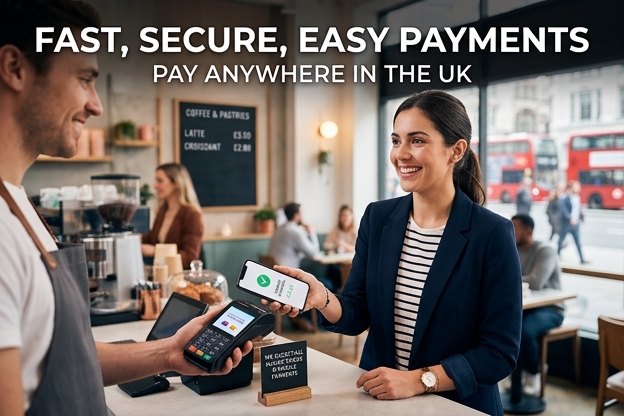
In most cases, the process follows a familiar pattern. You complete account registration, pass identity verification, access a virtual or physical card, fund your account with supported assets, and then spend where the card network is accepted. The merchant usually sees a normal card payment, not a direct crypto transfer.
That matters because it lowers friction at checkout. Merchants do not need to install blockchain payment gateways just to accept payment from the cardholder. Still, not every merchant category behaves the same way. High-risk verticals, recurring billing models, gaming-adjacent services, and offshore platforms can trigger tighter issuer scrutiny.
Here is where many users get caught off guard:
- Card authorization does not guarantee final settlement
- Foreign transaction and conversion policies may affect the final amount
- Some merchant category codes can be blocked or limited
- Card programs may change supported countries or assets over time
- Refund timing can be slower when crypto conversion is involved
According to the Nilson Report and broader card-industry coverage through 2024, card-not-present fraud remains a major pressure point in digital payments. That means any card product serving online and cross-border use cases must balance convenience with aggressive transaction monitoring.

Main benefits for users and online businesses
The strongest case for a product like RedotPay is convenience. If you already hold crypto and want to spend without manually cashing out every time, a linked card reduces steps. For internationally active users, it can also function as a flexible bridge between digital assets and daily expenses.
Potential advantages include:
- Faster practical access to funds: You spend through a card interface rather than moving through a separate off-ramp first.
- Cross-border usefulness: Remote workers, travelers, and globally distributed teams often prefer a spending tool that is not tied to a single local banking system.
- Merchant familiarity: Since merchants process a card payment, adoption is easier than asking every seller to accept crypto natively.
- Budget segmentation: Some users dedicate a crypto-linked card to online subscriptions, travel, or ad-hoc international purchases.
For businesses, the benefit is more indirect. Merchants are not necessarily integrating RedotPay itself, but they may gain access to a broader base of crypto-funded customers. That can be meaningful in sectors with global audiences, mobile-first spending, and buyers who are underbanked or multi-jurisdictional.
According to a 2025 PwC perspective on digital assets and financial infrastructure, firms increasingly care less about crypto as a speculative story and more about interoperable payment utility. That shift is exactly where cards like this try to compete.
Key limitations, risks, and compliance concerns
This is the part many reviews gloss over. A crypto-linked card is not the same as a traditional debit card backed by a standard insured checking account. It may be extremely useful, but users need to go in with clear expectations.
Jurisdiction and availability risk
Card availability may differ by residence country, verification status, and local regulation. A service can work well in one market and be unavailable or limited in another.
Merchant category restrictions
Some categories are more likely to face declines, enhanced review, or outright blocks. That can include gambling, quasi-cash, certain financial services, and some high-fraud digital merchants.
Fee complexity
Users often focus on headline fees and miss the stacked effect of spreads, ATM charges, foreign exchange markups, inactivity rules, or replacement card fees.
Volatility exposure
If the underlying balance is held in crypto, your purchasing power can change fast. That is fine for some users and unacceptable for others.
Support and dispute handling
Chargebacks, refunds, duplicate authorizations, and temporary holds can be more confusing when digital asset conversion sits behind the transaction.
“A good payment product is not just about speed. It is about what happens when something goes wrong: refund delays, disputed transactions, blocked merchants, and source-of-funds questions.”
According to the Federal Trade Commission and card-security guidance published through 2023 and 2024, consumer risk tends to rise when payment products are not fully understood at the point of use. That is especially true for hybrid products that combine digital assets, app-based wallets, and traditional card network behavior.
How RedotPay compares with other payment options
The best way to judge RedotPay is not in isolation but against realistic alternatives. Some users are choosing between RedotPay and a conventional debit card. Others are comparing it to direct exchange withdrawals, prepaid travel cards, or other crypto-linked cards.
| Payment Option | Best Use Case | Main Advantage | Main Drawback |
|---|---|---|---|
| RedotPay Card | Everyday crypto-funded spending and international purchases | Easy merchant acceptance through card rails | Possible country, fee, and merchant-category limits |
| Traditional bank debit card | Routine domestic spending and bill pay | Stable consumer protections and broad familiarity | Less flexible for crypto-native users and some cross-border cases |
| Exchange cash-out to bank | Larger withdrawals and account-based transfers | Clear fiat landing point | Extra steps and possible banking delays |
| Prepaid travel card | Budgeted travel spending in selected currencies | Good trip-specific spending control | No crypto utility and limited flexibility |
| Direct merchant crypto payment | Merchants that already support blockchain checkout | Native digital-asset transaction flow | Much lower merchant acceptance overall |
Who should use it and who should not
RedotPay may be a sensible option for users who already hold digital assets, want spending flexibility, and are comfortable managing app-based financial products. It can be especially useful for freelancers paid in crypto, internationally mobile users, and people making moderate-value online purchases across borders.
It may not be ideal if you need:
- Guaranteed universal acceptance across sensitive merchant categories
- Traditional bank-grade dispute expectations for every transaction type
- A primary household card for rent, utilities, and mission-critical recurring payments
- Zero exposure to conversion spreads or crypto price swings
For merchants, the key issue is different. You are not asking whether your business should “use” the card as a wallet product, but whether your payment stack is ready to accept customers funded by nontraditional sources. That means your risk engine, descriptor clarity, refund policy, and fraud controls matter more than ever.
Real-world experience from Gambling Merchant Account
I have worked with merchants who saw a sharp increase in international customer intent but a frustrating mismatch between checkout options and how those buyers actually held funds. In one case, a digital entertainment operator serving multiple non-U.S. regions noticed that a meaningful portion of support tickets came from users asking whether crypto balances could somehow be used for card-like checkout without wiring fiat through local banks first.
At Gambling Merchant Account, we did not treat that as a crypto trend story. We treated it as a payment-friction problem. We reviewed card-funded traffic patterns, issuer decline reasons, merchant category coding issues, and regional acceptance behavior. The takeaway was simple: users wanted familiar card checkout, but their source of value was increasingly digital and cross-border.
In another project, I helped assess how a higher-risk merchant could reduce abandoned deposits while staying aligned with acquirer expectations. We mapped customer regions, device data, and payment preferences, then separated direct crypto payment demand from card-network demand. What stood out was that customers often preferred a card-like experience even when their underlying funds originated in digital assets. That insight changed how the merchant prioritized payment messaging and fraud screening.
The result was not “accept everything.” It was better segmentation. Low-risk geographies and clearer transaction patterns were routed more efficiently, while higher-risk attempts were screened harder. That is the practical lens we use at Gambling Merchant Account: payment innovation only helps when it lowers friction without raising preventable operational risk.
How to evaluate and set up a card like this safely
If you are considering RedotPay or a similar crypto-linked card, use a process instead of jumping in blind.
- Check country eligibility. Confirm current availability for your residence and intended spending regions.
- Read the fee schedule carefully. Look beyond issuance fees and review ATM, FX, spread, replacement, and inactivity charges.
- Verify supported assets and conversion rules. Make sure the coins or stablecoins you plan to use are actually supported.
- Test with small transactions. Try ecommerce, in-person retail, and one subscription before scaling usage.
- Track refunds and authorizations. Keep screenshots and records so you can reconcile pending and final amounts.
- Do not rely on one payment rail. Maintain a backup card or bank option for essential transactions.
This step-by-step approach is boring, and that is exactly why it works. Most payment headaches happen when users assume a financial product is universal before it proves itself under normal, edge-case, and dispute scenarios.
What to expect from crypto-linked cards next
The next phase of crypto-linked cards will likely be shaped less by hype and more by regulation, issuer partnerships, stablecoin utility, and fraud analytics. Programs that survive long term will need stronger compliance transparency, clearer regional rules, and better support for refunds and disputed transactions.
According to industry commentary from Mastercard and Visa across 2023 to 2025, digital asset integration is moving toward practical use cases tied to identity, security, and programmable payments rather than headline-grabbing experimentation. For users, that probably means better-designed products but also stricter onboarding, monitoring, and merchant controls.
For businesses, the bigger lesson is that customer funding sources are becoming more fragmented. Some users hold fiat in banks, some in digital wallets, some in stablecoins, and some across all three. Payment stacks that adapt to this reality without weakening risk management will be in a stronger position over the next few years.
Conclusion
RedotPay can be a useful bridge between crypto holdings and ordinary card spending, especially for international users who value flexibility. But its real-world value depends on the details: supported countries, fees, merchant restrictions, conversion mechanics, and how well the card handles exceptions such as refunds and blocked transactions.
From the perspective of Gambling Merchant Account, the smartest way to view RedotPay is neither as a magic solution nor as a gimmick. It is a tool. Used correctly, it can reduce friction for certain users and complement a broader payment strategy. Used carelessly, it can create confusion around compliance, acceptance, and cash-flow expectations.
Recommended next steps from Gambling Merchant Account:
- Audit your personal or business payment needs by geography, merchant type, and transaction size.
- Test RedotPay with low-risk purchases before relying on it for important recurring or high-value payments.
- Keep a parallel payment setup so a card-program rule change does not disrupt your operations.
References
- Chainalysis 2024 research: Helped frame how practical payment utility influences crypto adoption.
- PwC digital assets perspectives, 2025: Provided context on infrastructure, interoperability, and business use cases.
- Federal Trade Commission guidance, 2023-2024: Informed the consumer-risk discussion around hybrid payment products.
- Card-industry reporting including the Nilson Report, 2024: Supported observations about fraud pressure and card-not-present risk.
- Visa and Mastercard digital asset commentary, 2023-2025: Offered directional insight on where card-linked digital asset programs are heading.
FAQ
What is RedotPay Card and how does it work?
RedotPay Card is a crypto-linked payment card that lets users spend supported digital assets through standard card acceptance networks. The merchant typically receives a normal card transaction, while the app or card program manages the underlying asset conversion and settlement flow.
Is RedotPay Card accepted everywhere?
No card is truly universal. Acceptance depends on the card network, issuer rules, your country, and the merchant category. Some transactions may be declined even if the card works well for regular retail or online purchases.
What fees should I check before using RedotPay?
Review the full pricing structure, not just the top-line fee. Pay attention to:
Card issuance or replacement fees
ATM withdrawal charges
Foreign exchange and conversion spreads
Inactivity or maintenance fees
Refund timing and any related deductions
Is RedotPay Card safe for everyday use?
It can be safe for routine spending if you use strong account security, keep balances proportionate, and test acceptance patterns first. It is still wise to keep a backup payment method because support handling, merchant restrictions, and conversion-related issues can affect specific transactions.
RedotPay Card: Everything You Need to Know before applying?
Before applying, check the basics that actually affect day-to-day use:
Your country and verification eligibility
Supported coins or stablecoins
Physical versus virtual card availability
Merchant category restrictions
Total fee impact on your typical spending pattern
Whether you need it as a secondary tool or a primary spending card
Can businesses benefit from customers using crypto-linked cards like RedotPay?
Yes. Merchants may see better conversion from globally distributed and crypto-funded customers because the checkout experience still feels like a standard card payment. The key is having strong fraud controls, clear billing descriptors, and risk-aware routing for sensitive industries.