Why Payment Authorization Deserves More Attention
Payment Authorization: What It Is, How It Works, and Best Practices is not just a back-end payments topic. It directly affects approval rates, customer trust, fraud exposure, cash flow timing, and chargeback risk. If your business sells online, runs subscriptions, accepts card-not-present transactions, or operates in a tightly monitored vertical, weak authorization performance quietly drains revenue every day.
That is exactly why merchants work with specialists like Gambling Merchant Account. In high-risk and high-volume environments, authorization quality is rarely about a single gateway setting. It is the result of better routing, cleaner transaction data, smarter fraud controls, issuer-aware retry logic, and a payments stack designed to convert more legitimate customers without increasing unnecessary risk.
Payment authorization is the process where the card issuer decides whether a transaction should be approved or declined before the money is captured. It checks available funds or credit, validates card and merchant data, and screens for risk signals. Strong authorization practices help merchants reduce false declines, improve conversion, and protect against fraud.
When authorization fails, the customer usually sees a declined payment. When it succeeds, the transaction can move to capture and settlement. That sounds simple, but the real-world process involves multiple parties, timing rules, fraud tools, data standards, and operational decisions that can either help or hurt your revenue.
Table of Contents
- What Payment Authorization Really Means
- How the Authorization Process Works
- Who Is Involved in the Decision
- Why Transactions Get Declined
- Authorization vs Capture vs Settlement
- How Authorization Varies by Business Model
- Best Practices to Improve Authorization Rates
- Real-World Case Study from Gambling Merchant Account
- Risks, Challenges, and Limits
- What Is Changing in Authorization Strategy
What Payment Authorization Really Means
Authorization is the issuer’s near-instant decision on whether a card transaction appears valid and payable. That decision does not always mean the merchant has the money yet. It means the issuer has approved the request based on available credit or funds, fraud checks, card status, and transaction context.
For merchants, the distinction matters. An approved authorization is an important milestone, but it is not the finish line. If you do not capture correctly, if your descriptor confuses customers, if your fraud rules are too aggressive, or if your data is incomplete, revenue can still be lost later in the process.
According to the Federal Reserve Payments Study published in recent years, card payments continue to represent a dominant share of noncash transaction volume in the United States. That means even small authorization inefficiencies at scale can produce meaningful revenue leakage. A one-point lift in approval rates can translate into significant top-line gain for subscription brands, travel merchants, gaming operators, and digital services.
How the Authorization Process Works
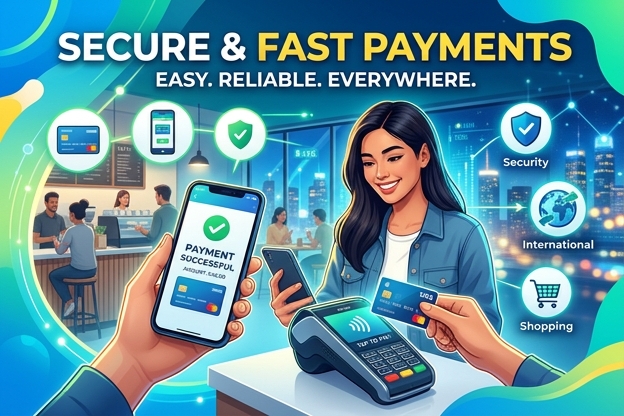
The core flow happens in seconds, but a lot is going on beneath the surface. A customer enters card details or taps a wallet. The merchant sends the payment request through a gateway or processor. The card network passes the request to the issuing bank, which evaluates the transaction and returns an approval or decline code.
Here is the standard flow:
- The customer initiates a payment online, in app, or at a terminal.
- The merchant sends transaction data to the payment gateway or processor.
- The processor routes the request through the relevant card network.
- The issuer checks account status, balance or credit line, fraud signals, and cardholder authentication data.
- The issuer approves or declines the authorization and sends a response back through the chain.
- If approved, the amount is typically held or reserved until capture.
This is where clean data becomes a conversion tool. Billing address accuracy, CVV submission, merchant category coding, token quality, device data, transaction amount logic, and 3D Secure signals can all influence the issuer decision.
Who Is Involved in the Decision
Payment authorization is a networked decision, not a one-company action. Understanding each participant helps explain why approval rates vary.
- Cardholder: Initiates the purchase and may trigger authentication steps.
- Merchant: Submits the request and controls checkout experience, data quality, and fraud settings.
- Gateway or processor: Transmits, formats, and sometimes enriches payment data.
- Card network: Connects acquirers and issuers and applies network rules.
- Acquirer: Sponsors the merchant account and helps manage processing risk.
- Issuer: Makes the final approve or decline call based on account and risk data.
In many high-risk sectors, the acquirer and processor relationship matters more than merchants first realize. A generic setup may process transactions, but a specialized setup can improve issuer trust, reduce avoidable declines, and better support unusual ticket sizes or usage patterns.
“Authorization optimization is one of the fastest ways to lift revenue without increasing traffic spend. Merchants often chase more acquisition before fixing the approvals they are already losing.”
Why Transactions Get Declined
Not all declines mean fraud or insufficient funds. Some are hard declines that should not be retried without changes. Others are soft declines that may succeed with authentication, updated credentials, different routing, or a later retry.
Common reasons include:
- Insufficient funds or credit limit issues
- Expired card or incorrect card details
- Issuer fraud suspicion
- AVS or CVV mismatch
- Velocity triggers from repeated attempts
- International transaction blocks
- Merchant category restrictions
- Authentication failures under 3D Secure
- Technical formatting or tokenization errors
Visa has repeatedly emphasized in its merchant and acceptance guidance that data completeness and authentication quality materially affect issuer decisioning. Likewise, Mastercard’s recent fraud and digital payments materials point to stronger identity signals and tokenized credentials as key tools for balancing security and approvals.
One of the biggest hidden problems is the false decline: a legitimate customer whose payment is rejected. According to reports released by PYMNTS Intelligence and other payments analysts in the last few years, false declines remain a major source of lost sales for online merchants, especially in digital and cross-border commerce. This is where disciplined authorization strategy becomes commercially important, not merely operational.
Authorization vs Capture vs Settlement
These three terms are often blurred together, but they do different jobs.
Authorization is the approval request. Capture is the merchant’s instruction to finalize the approved amount. Settlement is the transfer of funds through the banking system to the merchant account.
In some businesses, the gap between authorization and capture is short. In others, such as hospitality, travel, and gaming-related transactions, it can be more nuanced due to delayed fulfillment, incremental authorizations, or risk review.
Operational mistakes here can be expensive. Letting authorizations expire before capture, capturing the wrong amount, or mishandling partial shipments can trigger extra declines, customer complaints, and reconciliation issues.
How Authorization Varies by Business Model
| Business Type | Typical Authorization Challenge | High-Impact Tactic | Expected Operational Focus |
|---|---|---|---|
| Subscription SaaS | Recurring billing soft declines and expired cards | Account updater and smart retry schedules | Dunning logic and lifecycle billing rules |
| Ecommerce retail | False declines from fraud filters and AVS mismatches | Better fraud tuning and issuer-friendly checkout data | Cart conversion and order review workflows |
| Online gaming | High issuer sensitivity, MCC scrutiny, and regional restrictions | Specialized acquiring, routing, and KYC-aligned controls | Risk segmentation and regulatory alignment |
| Travel and hospitality | Delayed capture, adjustments, and no-show disputes | Proper preauthorization management | Folio accuracy and timing controls |
| Cross-border digital services | Currency mismatch and issuer distrust of foreign merchants | Localized acquiring and currency presentation | Regional payment optimization |

Best Practices to Improve Authorization Rates
There is no single switch that fixes approval performance. The best results usually come from layered improvements across data, fraud, routing, and customer experience.
Send better transaction data
Issuers reward clarity. Submit accurate billing information, CVV, device signals, merchant descriptors, and where relevant, strong customer authentication data. If your data is inconsistent, the issuer sees uncertainty.
Separate fraud prevention from conversion suppression
Many merchants overblock. Aggressive fraud filters can reduce fraud, but they can also reject valuable customers. Review false-positive rates regularly and build segmented rules based on geography, BIN range, amount, product category, and customer history.
Use smart retries, not blind retries
Retrying a declined card five times in ten minutes usually makes things worse. Use issuer response codes to distinguish between retryable and non-retryable declines. For subscription billing, timing matters. A retry on payday or during business hours often performs better than an immediate repeat attempt.
Adopt network tokens and account updater tools
Tokenization can improve security and continuity, particularly when cards are reissued. Network token programs and account updater services help preserve recurring revenue and can improve issuer confidence.
Match your payments stack to your risk profile
A standard ecommerce setup may be fine for low-risk retail, but it can underperform in industries with unusual transaction patterns. This is one area where specialized providers create measurable value.
Review these metrics every month
- Gross authorization rate
- Net approval rate after fraud screening
- Soft-decline recovery rate
- False decline estimate
- 3D Secure challenge completion rate
- Recurring payment success rate
- Chargeback-to-approval ratio
According to the Nilson Report and widely cited industry processing benchmarks from recent years, card fraud pressure remains elevated while digital transaction volumes keep rising. That combination forces issuers to make millions of high-speed decisions under uncertainty. Merchants that supply cleaner data and stronger context are more likely to win approvals.
Real-World Case Study from Gambling Merchant Account
I worked with a merchant operating in a regulated gaming-adjacent space that had a painful pattern: decent traffic, healthy average order value, and suspiciously low authorization success on weekends. Their first assumption was fraud. After a closer review, the real issues were a mix of generic routing, weak issuer response analysis, and checkout fields that increased entry errors on mobile.
At Gambling Merchant Account, we helped restructure the flow. We tightened form validation without adding friction, adjusted decline handling for soft responses, and aligned the processing setup with acquirers better suited to the merchant category. We also changed when repeat attempts were allowed and split reporting between issuer declines and merchant-side fraud rejects.
Within one quarter, the merchant saw approval performance improve meaningfully, while fraud stayed within tolerance. What mattered most was not one dramatic technical change. It was a disciplined authorization program built around cleaner data and better decision logic.
In another engagement, I saw a recurring-billing operator losing customers because saved cards were aging out. Their team blamed churn. But a review showed a large share of failed renewals came from expired credentials and poor retry timing. Gambling Merchant Account introduced account updater support and a segmented retry calendar based on issuer behavior and customer timezone. Revenue recovery improved without adding discount pressure or sales intervention.
“The merchants with the best approval rates usually do not have the loosest controls. They have the cleanest data, the most thoughtful routing, and the best understanding of which declines should actually be challenged.”
Risks, Challenges, and Limits
It is important to stay balanced here. Better authorization strategy does not guarantee universal approval, and chasing every possible approval can create new problems.
Potential challenges include:
- Fraud tradeoffs: Looser controls may lift approvals but increase chargebacks.
- Issuer opacity: Issuers do not disclose every rule behind declines.
- Regulatory constraints: Some sectors face added KYC, AML, or jurisdictional restrictions.
- Cross-border complexity: Local issuer preferences and regional rules vary widely.
- Technical debt: Legacy gateways may limit token use, routing, or rich data submission.
According to a 2024 report by Juniper Research on digital payment fraud, ecommerce and remote payment risk continues to evolve as fraud tools become more automated. That means merchants cannot optimize authorization in isolation. Security, compliance, customer experience, and acquiring strategy must work together.
What Is Changing in Authorization Strategy
Authorization is becoming more context-rich and more network-aware. Over the next few years, merchants should expect stronger use of tokenization, broader issuer preference modeling, more adaptive authentication, and increased reliance on machine learning for both fraud screening and retry logic.
Three trends stand out:
- Network tokens will matter more: They support continuity, security, and cleaner credential lifecycle management.
- Localized and multi-acquirer strategies will expand: Especially for cross-border and high-risk merchants.
- Authorization analytics will get more granular: Teams will move beyond top-line approval rates into issuer-level performance engineering.
For merchants in scrutinized sectors, the direction is clear. Generalist payment setups will continue to struggle where specialist infrastructure performs better.
Conclusion
Payment authorization sits at the center of revenue protection and conversion performance. It determines whether a valid customer can pay, whether risk signals are interpreted accurately, and whether your payment stack supports growth or quietly limits it. The strongest merchants treat authorization as an optimization discipline, not a passive processor outcome.
Gambling Merchant Account recommends these next steps:
- Audit your approval rates by issuer, geography, card type, and device instead of relying on one blended number.
- Review your soft-decline handling, retry logic, and recurring billing setup for preventable revenue loss.
- Evaluate whether your current acquiring and routing structure matches your actual business risk profile.
References
- Federal Reserve Payments Study — Offers data on noncash payment growth and the importance of card transaction performance.
- Visa merchant acceptance and risk guidance — Provides practical standards for transaction data quality, authentication, and issuer trust signals.
- Mastercard payments and fraud insights — Highlights the role of tokenization, digital identity, and fraud controls in payment performance.
- PYMNTS Intelligence research — Documents the commercial impact of false declines and failed checkout experiences.
- Juniper Research digital payment fraud reports — Tracks evolving fraud pressure and its implications for remote commerce authorization.
- Nilson Report — Supplies payment industry benchmarks and long-term context around card usage and fraud trends.
FAQ
What is Payment Authorization: What It Is, How It Works, and Best Practices?
Payment authorization is the issuer’s decision to approve or decline a card transaction before capture. Best practices include sending accurate transaction data, tuning fraud controls carefully, using smart retries, and monitoring approval rates by issuer and channel.
Is an authorized payment the same as a completed payment?
No. Authorization means the issuer approved the transaction and usually placed a hold on funds or credit. The payment is only completed after capture and settlement are processed correctly.
What causes false declines?
False declines often happen when issuers or merchant fraud systems misread a legitimate transaction as suspicious. Common triggers include unusual spending patterns, location mismatches, incomplete billing data, aggressive fraud rules, or poor authentication signals.
How can merchants improve payment authorization rates?
Merchants usually get the best results by combining several tactics:
Submit complete and accurate customer and transaction data
Use network tokens and account updater tools
Refine fraud rules to reduce false positives
Apply smart retry logic based on issuer response codes
Work with an acquiring setup that fits the business model
Why does authorization matter so much for high-risk merchants?
High-risk merchants face stricter issuer scrutiny, more fraud pressure, and more frequent category restrictions. That makes data quality, routing, compliance alignment, and decline recovery far more important than in low-risk retail environments.
Should merchants retry every declined transaction?
No. Some declines are hard declines and should not be retried without a change in card details or customer action. Merchants should separate retryable soft declines from non-retryable responses and apply timing rules carefully.